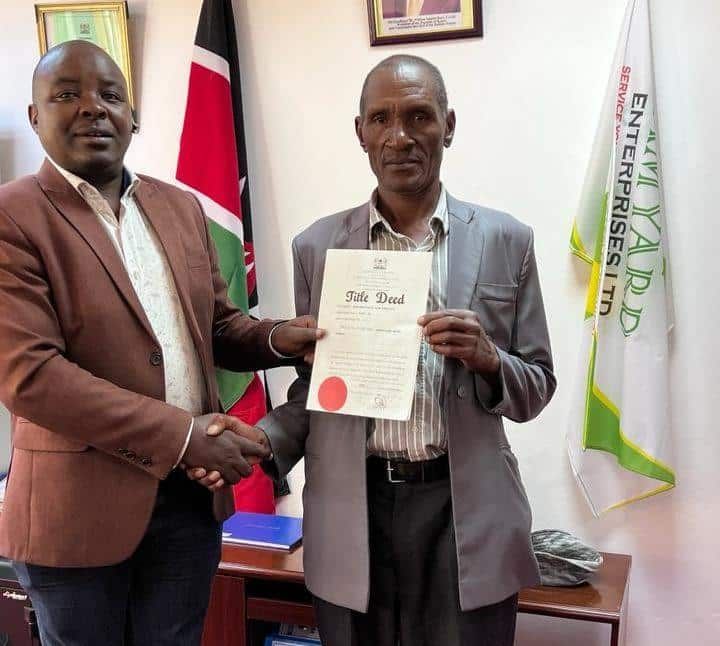
Land Buying Scams in Kenya: The Common Tricks and How to Avoid Them
 Eddy NdumiaHead of Technology & Digital Products, Famyard Enterprises
7 min read
Every year, Kenyans lose savings to land deals that turn out to be fake. Some lose a deposit. Some lose everything they paid over years of instalments. Many of them were careful people who simply did not know what to check.
The good news is that land fraud follows a small number of patterns. Once you know them, the warning signs are easy to spot, and a few simple checks stop almost all of them. This guide covers the common scams, how each one works, the red flags, and what to do if you think you have been targeted.
The most common land scams
1. Fake title deeds
The seller shows a title deed that looks real but is forged, or is a real title for different land. Paper, stamps and signatures can all be faked well enough to fool most people.
How to beat it: Run your own official search on the title number at the land registry or on Ardhisasa, and compare the result with the title and the seller's ID. Our guide to spotting a fake title deed explains how.
2. Selling land the seller does not own
The "seller" is not the owner. They might be a relative, a caretaker, a tenant, someone with a stolen title, or someone using a fake ID with the owner's name. They often say the owner is abroad, sick or too busy to come.
How to beat it: The name on the official search must match the seller's ID. If someone is selling for the owner, insist on a registered power of attorney and verify it. Try to speak to the owner directly.
3. Double sales
One plot is sold to two or more buyers. This is most common when land is still on a mother title and the seller keeps their own list of who bought which plot.
How to beat it: Prefer plots with their own titles. If buying on a mother title, check the seller's track record, see the approved survey, and talk to other buyers in the estate. Check the ground: if someone else's fence or crop is on "your" plot, ask why.
4. Fake agents and fake companies
Someone claims to work for a known company, uses its name and photos, and takes payments. Or a "company" exists only as a Facebook page and a phone number.
How to beat it: Visit the company's office. Call the number on its official website, not the number in an advert or message. Check that it is a registered business. Our guide to vetting a land selling company lists the checks.
5. Payment diversion
You are buying from a genuine seller, but someone sends you "new" bank or M-Pesa details by SMS, WhatsApp or email, pretending to be the seller. You pay, and the money goes to the fraudster.
How to beat it: Only pay into accounts written in your sale agreement. If you get new payment details, call the office on a number you already trust before you pay a shilling.
6. Land with hidden problems
The title is genuine and in the seller's name, but the land has a bank loan, a caution, a court case, a family dispute or a road reserve the seller does not mention.
How to beat it: The official search shows charges and cautions. Ask neighbours and the local chief about disputes. Ask the county planning office about road reserves and zoning.
7. Land that does not exist, or is not where you were shown
You are shown a plot on the ground, but the title is for a different parcel, or for land in a riparian zone, a forest, a road reserve or public land.
How to beat it: Compare the survey map with the beacons on the ground. If in doubt, hire your own licensed surveyor.
8. "Too good to be true" prices
A plot priced far below everything around it is the bait in many scams. The seller says they need cash urgently and the deal must close today.
How to beat it: Know the going rate in the area. A low price is a reason to check more carefully, not less.
9. Fake documents during transfer
You have paid, and someone hands you a "new title" in your name. It is fake, and the land was never transferred.
How to beat it: Once you get your title, run another official search to confirm the register shows you as the owner.
Red flags at a glance
| Red flag | What it might mean |
|---|---|
| The seller resists your own search | The title or ownership does not hold up |
| Pressure to pay today | They want your money before you check |
| Price far below the area | Bait for a scam |
| Payment to a personal account or a new number | Payment diversion or a fake seller |
| The owner is "abroad" and someone else is selling | The seller may not have authority |
| No office, only a phone number | A fake agent or company |
| Only a photocopy of the title, never the original | The seller may not hold the title |
| The seller cannot show beacons or a survey map | The plot may not exist as described |
| "The title will be sorted later" | A charge, caution or missing title |
| The seller insists on their own advocate only | You have no independent check |
The checks that stop almost every scam
Do these every time, in this order, before you pay anything beyond a refundable booking:
- Visit the land. See the beacons, walk the access road, talk to neighbours.
- Get the title number for the exact plot.
- Run your own official search. Check owner, size, charges and cautions. Our title deed verification guide shows how.
- Match the seller's ID (or company records) to the owner on the search.
- Check the survey map against the beacons.
- Visit the seller's office if it is a company.
- Sign a written sale agreement before paying a deposit. See how to read a land sale agreement.
- Pay only into accounts in the agreement, and get a receipt every time.
- Search again before paying the balance.
- Search again after you get your title, to confirm it is in your name.
Using your own advocate covers most of this for you. Our guide to what an advocate does in a land transaction explains the role.
If you live abroad
Buyers in the diaspora are targeted more often because they cannot easily visit. The same checks apply, done through people you trust:
- Send a trusted relative or friend to the land, and ask for a live video call from the plot.
- Hire your own advocate in Kenya to run the search and handle the paperwork.
- Use a registered power of attorney if someone must sign for you.
- Never pay based on photos and a phone call alone.
Our guides to buying land in Kenya remotely and power of attorney for diaspora buyers cover this in detail.
Buying from a company
Buying from an established company with offices and many past buyers reduces many of these risks, but it does not remove the need to check. A genuine company will:
- give you the title number for your plot and welcome your own search;
- show you the beacons and the survey;
- put everything in a written agreement;
- take payments only into its official accounts and issue receipts;
- have an office you can walk into.
Famyard Enterprises has offices in Nyeri and Jikaze that you can visit. Ask for the title number of any plot you are considering and run your own search before paying.
What to do if you think you have been scammed
- Stop paying. Do not send any more money, whatever the reason given.
- Keep all evidence. Agreements, receipts, M-Pesa messages, bank slips, chats, call logs, the title copy and the search.
- Get an official search on the land if you do not have one.
- See an advocate about recovering your money and protecting any claim to the land.
- Report it to the police and the Directorate of Criminal Investigations, and inform the land registry for the area.
- Ask your advocate about a caution on the land, to stop it being sold again while your claim is resolved.
- Warn others. Tell other buyers in the same "estate"; you may not be the only one.
Frequently asked questions
What is the most common land scam in Kenya?
Selling land the seller does not own, often with a fake or borrowed title, and double sales of the same plot. Both are caught by an official search and by matching the owner to the seller's ID.
How can I check if a land seller is genuine?
Run an official search on the title number, match the owner to the seller's ID or company records, visit their office, and talk to other buyers.
Is it safe to pay a deposit before doing a search?
No. Do the search first. If you must hold a plot, keep any booking fee small and make sure it is refundable in writing.
Can I buy land safely from abroad?
Yes, with a trusted person on the ground, your own advocate, a registered power of attorney if needed, and payments only to accounts in the agreement.
What should I do if I paid for land and the seller disappeared?
Stop paying, keep all evidence, report to the police and the DCI, inform the land registry and get an advocate to advise on recovery and a caution.
Buy safely
Browse all Famyard plots and land for sale in Nyeri County, ask for the title number of any plot and run your own search, or call or WhatsApp Famyard Enterprises on +254 119 222666 to book a free site visit.